
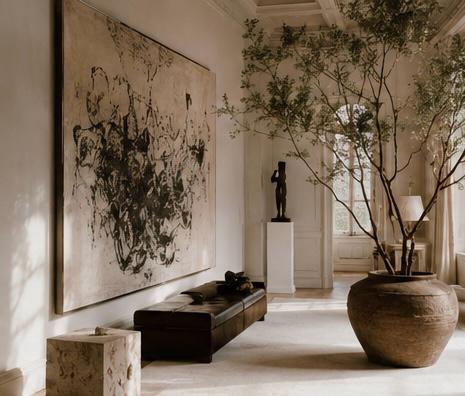
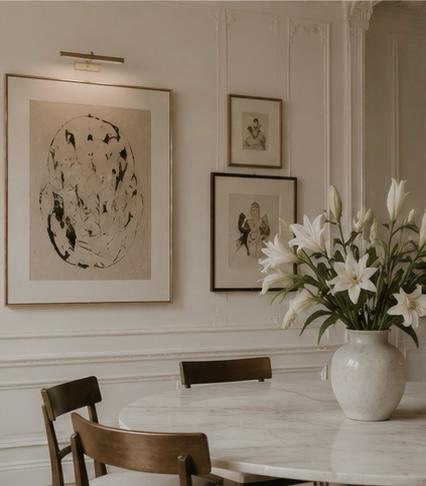
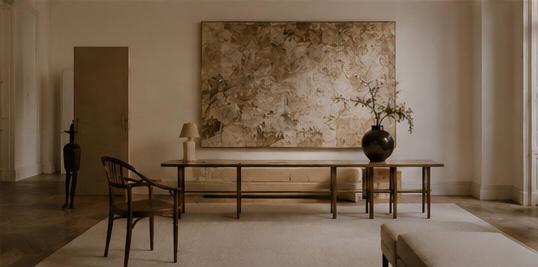
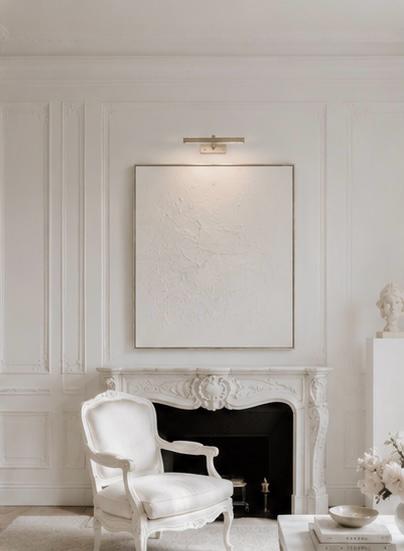
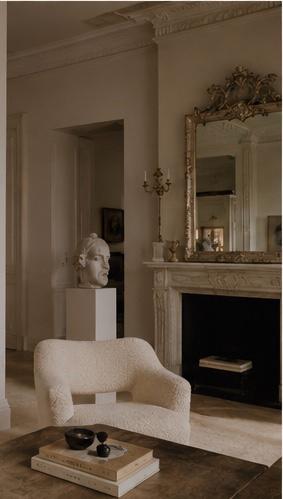
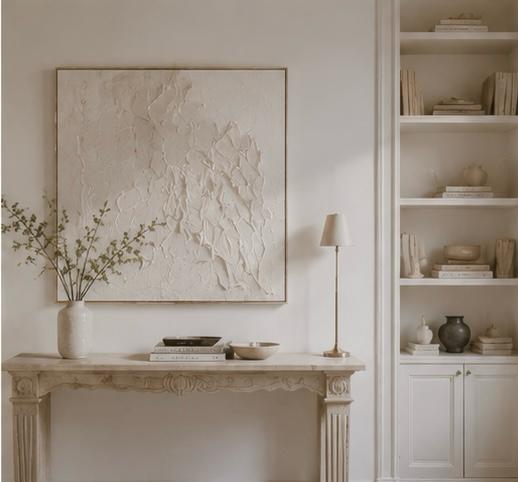
I’ve noticed something that happens in almost every project. The furniture is selected, the finishes are approved, the lighting has been installed, and the styling is nearly complete. Then someone says, “We should probably find something for that empty wall.” As though art is the final item on a checklist. I’ve never been able to think about it that way.
Perhaps it’s because I studied interior design before finding myself fascinated by museums and heritage. Spending time in galleries changes the way you look at space. You begin to realise that objects aren’t simply placed somewhere because there’s room for them; they’re positioned because they have something to say. The space is designed around them just as much as they contribute to it. That way of thinking quietly followed me back into interiors, and it has shaped how I approach every project since.
I’ve always believed that a room can function perfectly without art. It can even be beautiful. But beauty isn’t always what makes us remember a place. Some of the spaces that have stayed with me over the years aren’t the grandest or the most expensive. They’re the ones where there was something that made me pause—a painting that seemed to belong nowhere else, a ceramic piece that looked as though it had always lived on that shelf, or a photograph that quietly revealed something about the people who called that place home. Those moments are rarely accidental.
When art is considered from the beginning of a project, it starts influencing everything else. Colours become more intentional, materials begin to echo one another, and lighting becomes less about illumination and more about appreciation. The room gradually develops its own point of view rather than simply following a particular style. It’s a subtle difference, but I think it’s one of the things that separates a well-designed interior from one that feels truly memorable.
We’ve become accustomed to treating artwork as decoration—as something that fills a blank wall once the “real” design work is done. To me, it’s often the opposite. Art is usually the element that makes a space feel lived in rather than staged. It tells you what someone was drawn to, what they collected while travelling, which artist they chose to support, and what memories they wanted to surround themselves with. Even when people don’t realise it, the artwork they live with often says more about them than the furniture they own.
Maybe that’s why I’m always more interested in hearing the story behind a piece than its price. I’ve seen original works by emerging artists bring far more life to a room than expensive pieces chosen simply because they matched the colour palette. Good art doesn’t need to match the cushions. It needs to belong. I don’t think every interior needs to feel like a gallery. Homes should still feel comfortable, hotels should still feel welcoming, and restaurants should still feel lively. But I do think every space deserves something with a soul. Long after we’ve forgotten the marble, the upholstery, or exactly which shade of paint was on the walls, we tend to remember how a space made us feel. More often than not, it’s the art that stays with us.
Maybe that’s why I don’t see it as the finishing touch. I see it as one of the first conversations worth having.
People often use styling and decorating interchangeably, and I understand why. Both involve furniture, artwork, objects, textiles, and the details that make a space feel complete. From the outside, they can appear almost identical. But over time, I’ve realised they’re driven by two very different intentions. Decorating asks, “What should we add?” Styling asks, “What…